Ping Pong Manga
- Author
- Taiyo Matsumoto
- Published
- 1996–1997
- Volumes
- 2
- Type
- Seinen
- Magazine
- Big Comic Spirits
- Publisher
- Shogakukan
- English
- VIZ Media
Panels © Taiyo Matsumoto / Shogakukan, shown small for review
What is Ping Pong about?
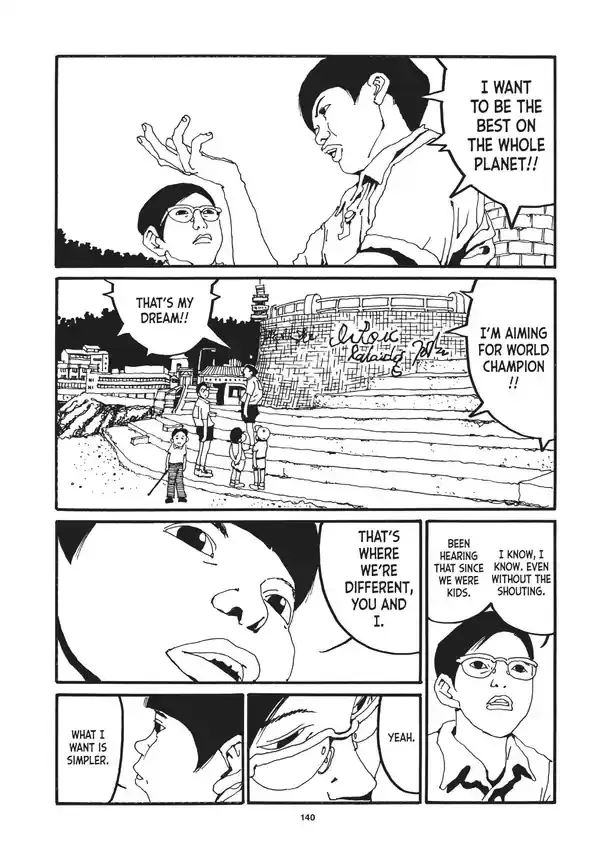
Ping Pong is a two-volume seinen manga (in English) by Taiyo Matsumoto, the artist behind Tekkonkinkreet and Sunny. It follows two boys who grew up playing table tennis together at the Tamura club, a tiny hall in a seaside town. Peco is loud, cocky and gifted, and has always known he’ll be world champion. Smile is quiet and expressionless, might be even better, and says ping pong is just a way to kill time.
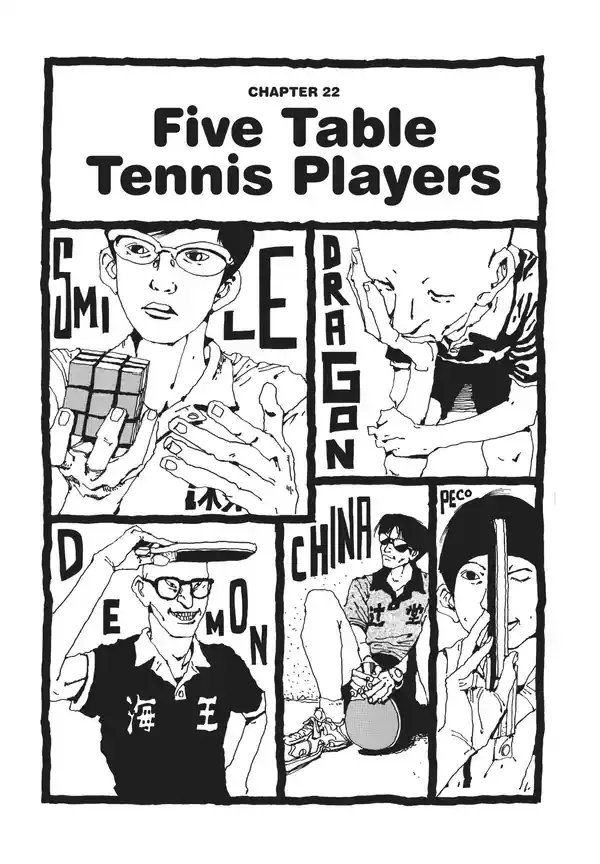
Around them is a handful of rivals, each playing for a different reason. Kong, a Chinese player trying to save his career in Japan. Dragon, the champion who can’t enjoy winning. Demon, who works harder than anyone and still isn’t enough. On the surface it’s a sports manga about high school tournaments. Underneath it’s about talent, about the people who believe in us, and about why anyone plays at all.
Is Ping Pong worth reading?
Yes, absolutely. I’ve read it twice and it’s one of the best manga I know, sports or otherwise. If you’ve only seen the anime, read the manga too. If you think you don’t like sports manga, read it anyway. It’s only two volumes in English, there’s no tournament arc that drags on for years, and every match is really about the person holding the bat.
The only reason to skip it is the art. At the start it feels really weird, and it only truly comes together at the end. It definitely takes a few chapters to click. If you need clean, polished lines, Matsumoto’s scratchy, loose style is not for you.
What’s good about Ping Pong
The art, once it clicks, especially in the last few chapters. Matsumoto has a unique way of drawing movement. Bodies stretch and warp, and the camera sits at crazy, movie-like angles, from high up in the roof girders to an inch from a sweating face. It’s rough on purpose, and it gives the rallies a unique, raw vibe.
The characters. Hyper-mature character building, and no villain. Every rival gets a reason to play and a reason to hurt, and by the end you want all of them to win, or at least to “look cool” ;)
Short and tight. Two volumes and no filler. Matsumoto communicates efficiently and effectively, and the ending is clean.
All the layers underneath. In the end it’s a masterpiece because of how everything combines to tell the story and its meaning. The raw art, the symbolism, the characters and the timelines converging, true feelings rising to the surface. Everything falls into place by the end.
What’s bad about Ping Pong
The art is hard going in the first few chapters if you’re used to cleaner manga, and sometimes I just didn’t like it.
A few side characters only get a handful of pages, but I can live with that. And if you want the technical side of the sport, the spin, the grips and the tactics, you get flashes of it, but it’s never the point.
Ping Pong anime vs manga
Honestly, I’ve only read the manga. The anime, Ping Pong the Animation, is an 11-episode series from 2014, directed by Masaaki Yuasa at Tatsunoko Production. It won Television Animation of the Year at the Tokyo Anime Award Festival in 2015, and it’s the reason so many people find Ping Pong in the first place.
But for me, I have no idea how it could beat the manga. Read the manga first, and if you love it, the anime is there as a second take on the same story.
There’s also a live-action film from 2002, directed by Fumihiko Sori… so much to watch, so little time.
Ping Pong characters and what they represent
Every player in Ping Pong is playing for something different, and that’s really what the story is about. Here’s each of them, what they stand for, and the panel that sums them up.
Makoto Tsukimoto (Smile)
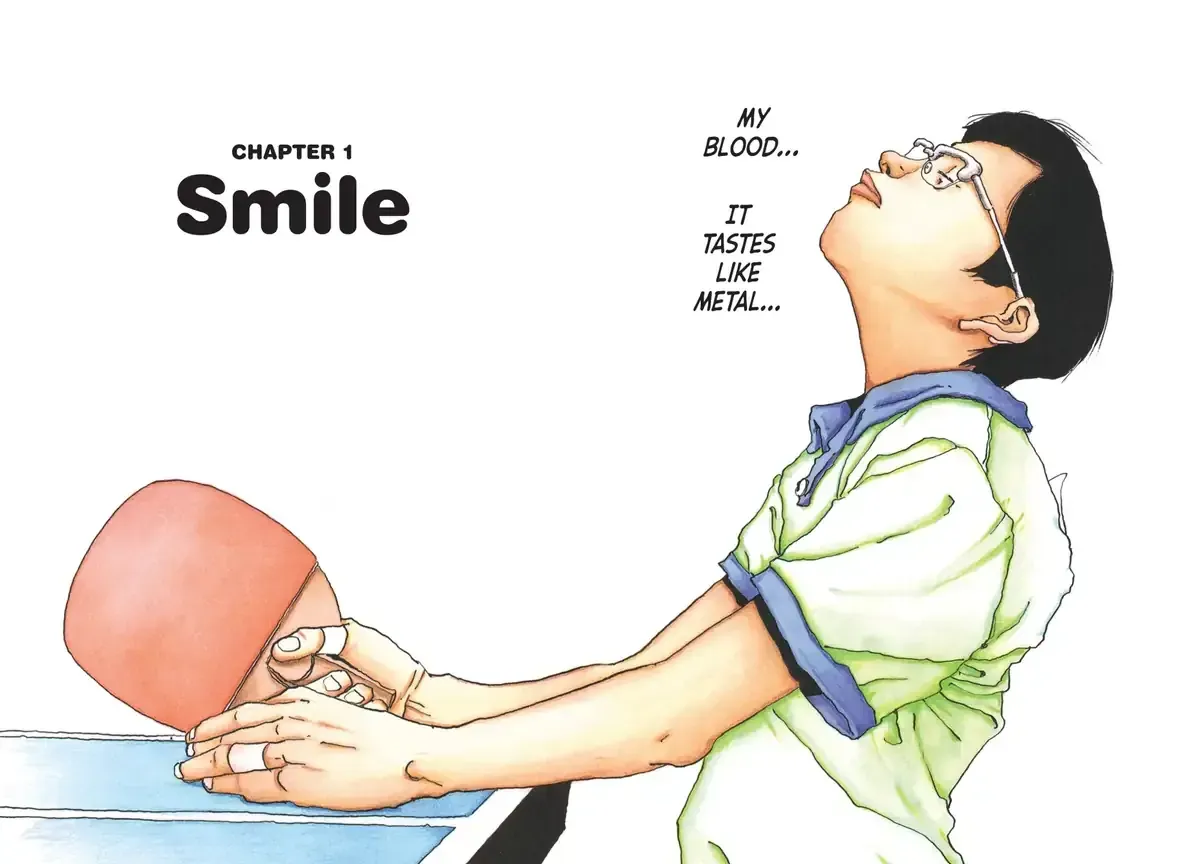
Smile gets his name because he never does. He’s one of the most gifted players in the prefecture, but he doesn’t have the hunger, and I don’t think that’s because he’s cold. If anything, Smile feels too much. Winning means taking something from someone else, and he’d rather let a friend win than do that. So he hides behind a blank face and says ping pong is just a way to kill time, because that’s easier than admitting he wants anything at all. His coach, Butterfly Joe, sees a future champion. Smile just wants to be left alone.
What he’s really doing is waiting. They’ve been friends since they were small. Peco was the one who stood up to the kids who bullied Smile, and the one who brought him to the Tamura club and taught him to play. Peco has been his hero ever since, and in Smile’s head he’s never stopped being one. While Peco goofs off, Smile keeps getting better, but secretly he’s hoping for the day the hero comes back to save him from all this.
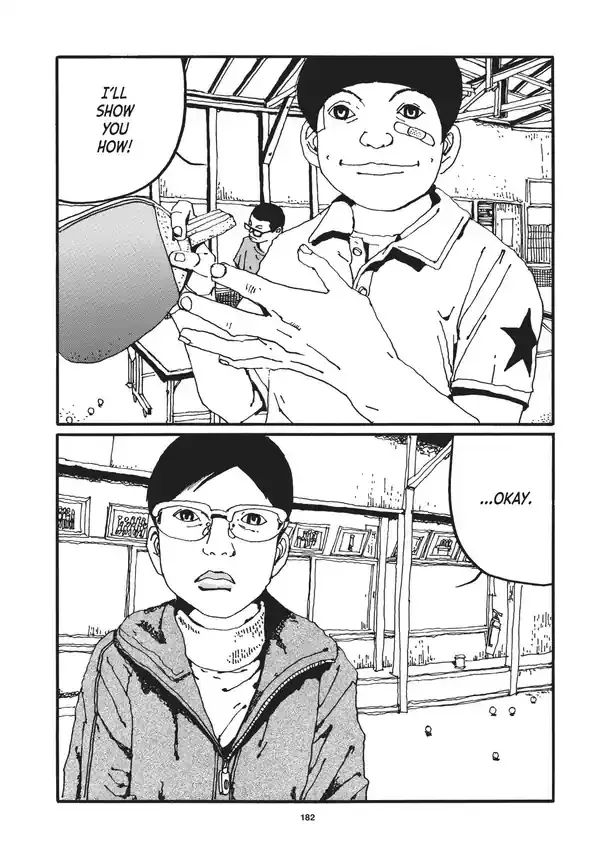
Smile stands for talent without desire. He could have made it to the top. He just never really wanted to, and he says so again and again. Butterfly Joe keeps trying to give him the hunger, in a bid to justify his own past. But in the end, the two of them are the same.
Yutaka Hoshino (Peco)
Peco is all mouth and natural talent. He eats sweets, skips practice, sets high scores at the arcade and is sure he’s the best player alive. Then he loses. First Kong skunks him 21–0, early in the manga. Then Demon, the old friend from the Tamura club he always used to beat, knocks him out too. So he quits.
His comeback is the heart of the manga. He goes back to Obaba at the Tamura club, trains until he collapses, and plays on with a knee that could give out at any moment.
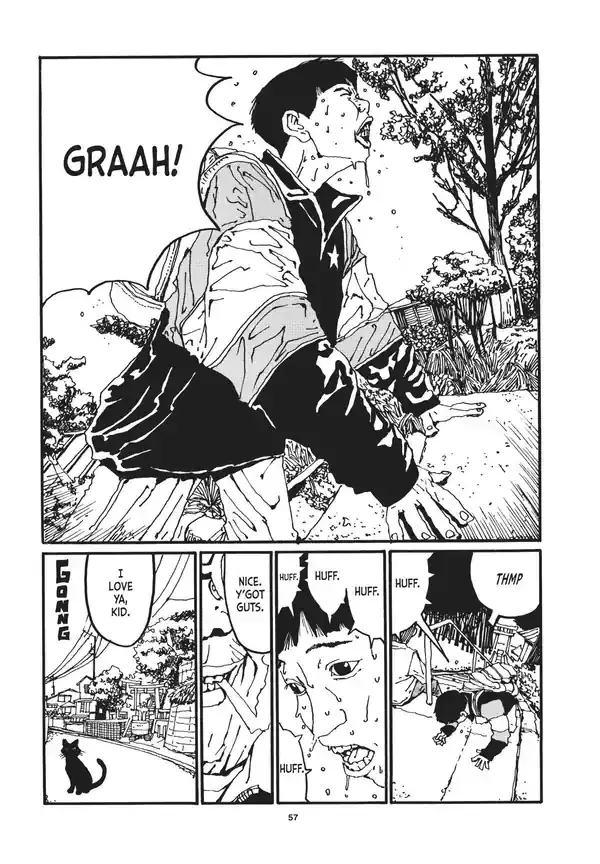
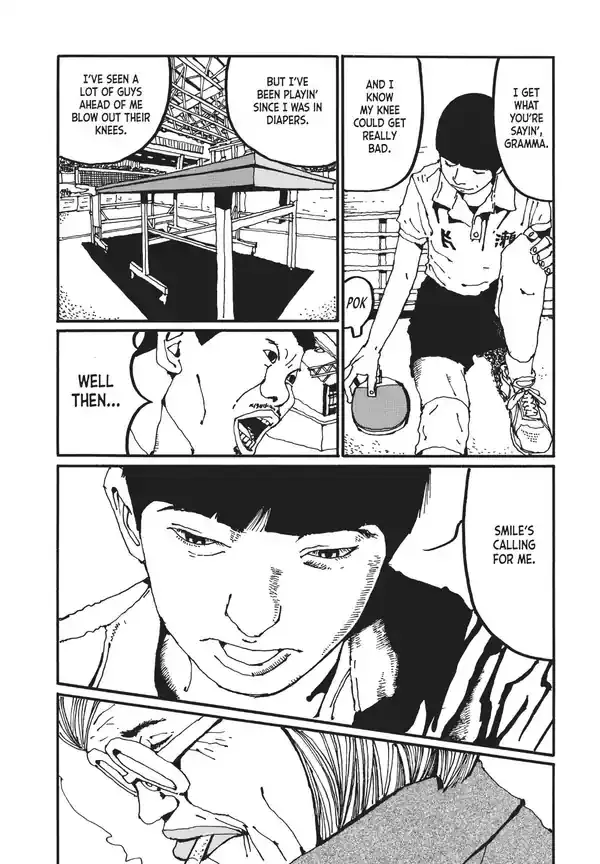
Peco stands for joy and self-belief. Plenty of players in Ping Pong have the talent. Peco is the only one with the mind to go with it, the crazy, unshakeable belief that he’s going to win, and he only becomes great when he remembers that ping pong is fun.
The moon and the star
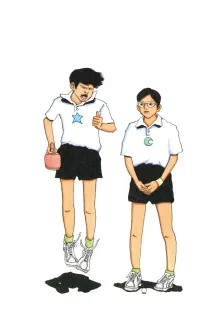
Matsumoto hides the whole relationship in their names. Tsukimoto has tsuki, moon, in it, and Smile wears a crescent moon on his shirt. Hoshino has hoshi, star, and Peco wears a star. A star is a sun. It makes its own light, while a moon only shines by reflecting someone else’s.
Peco is the hero and Smile is the support. Smile needs Peco’s light, and Peco needs Smile to reflect it back to him.
Wenge Kong (China)
Kong was a competitive player in China, but not quite good enough, and he kept losing. So he comes to Japan to revive his career, arrogant and homesick, sure he’s too good for a country that doesn’t matter in the sport. Every match is a ticket home.
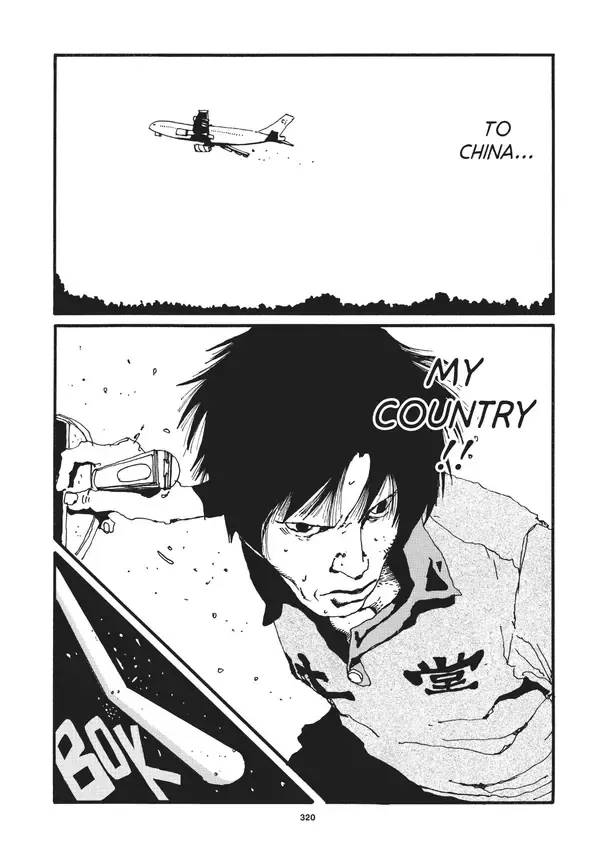
Then he loses in Japan too, and has to accept it. Over the story he softens. He starts to like the place, the people and even the team, and learns to play for something other than escape. Kong stands for pride, and for what’s left when it breaks.
Ryuichi Kazama (Dragon)
Dragon is the champion of Kaio Academy, the player everyone fears. Shaved head, perfect technique, and before every match he locks himself in a toilet stall to calm down. He’s carrying his school, his family’s expectations and the weight of never being allowed to lose.
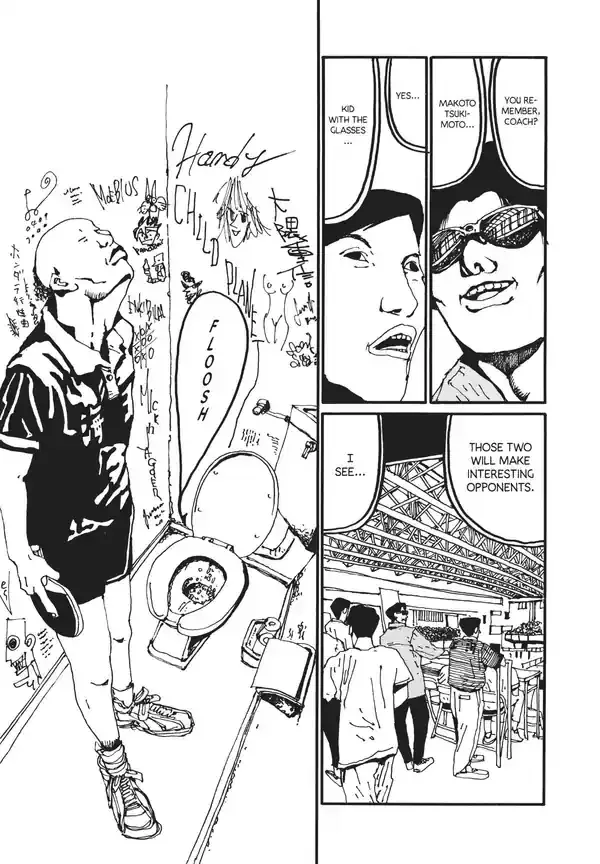
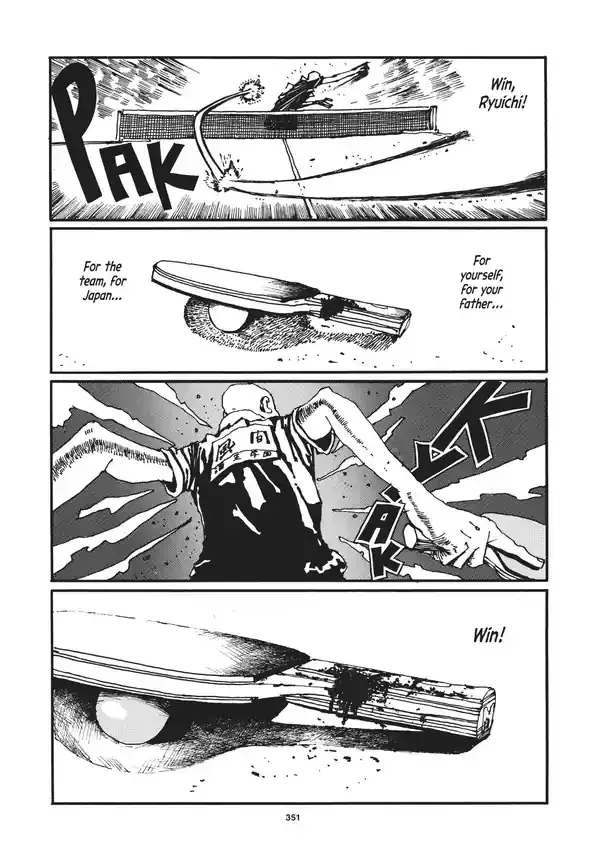
Dragon stands for winning without joy, and to me he’s a very Japanese figure. He isn’t playing for himself. He’s playing for his father, his family name, his school and, in the end, his country, and all of it sits on his shoulders. Duty comes before self, and losing isn’t just losing, it’s shame. The only place he can be alone is a toilet stall. He’s the best player in the story and probably the unhappiest, and it takes losing to Peco to set him free, and to let him feel what it’s like to just play.
Kaio Academy
Kaio is the powerhouse school, and it’s almost a character of its own. It runs its team like a military camp, all drills, discipline and slogans, built to turn out winners. There’s no room in it to be yourself. Dragon carries its weight, and Demon gives everything to earn a place in it.
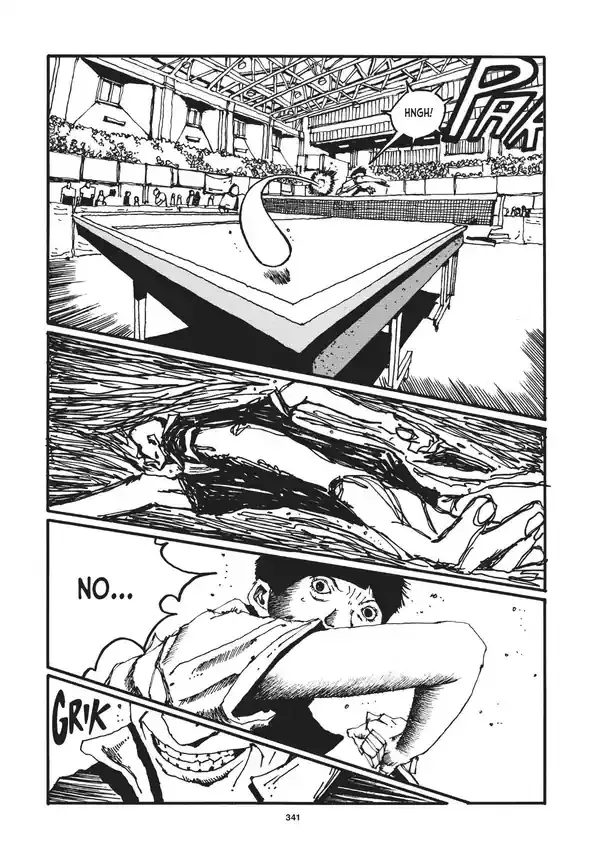
And in the end, Kaio loses, to a kid from a small school who plays because it’s fun. Kaio stands for the system, the kind that can make you strong, but never free.
Manabu Sakuma (Demon)
Demon grew up at the Tamura club with Peco and Smile, and was always the third. With no natural gift, he outworks everyone, earns a place at Kaio and finally beats Peco. It should be his moment, but he knows he’ll never be Smile, and it eats at him.
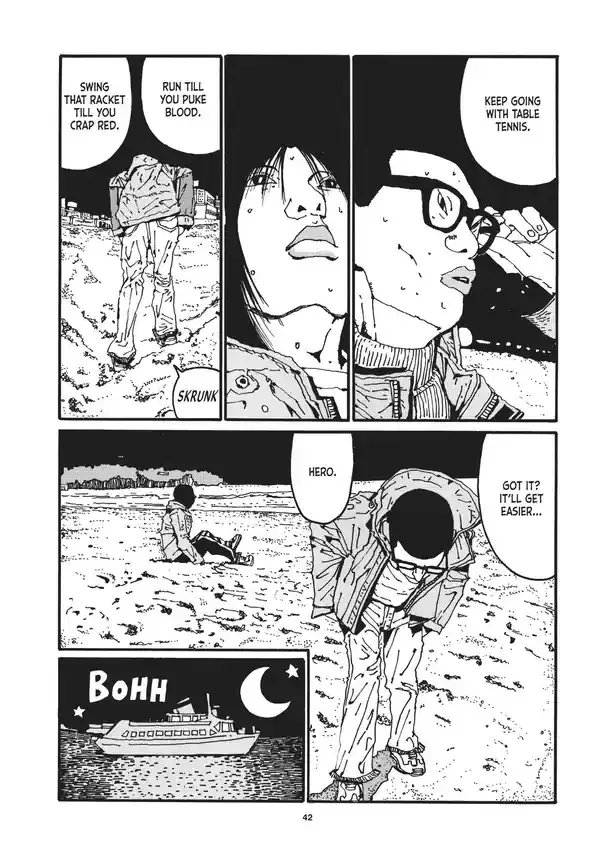
Demon stands for hard work and its limits, and for everyone who realises they’re not going to make it, and finds a way to be happy anyway. He’s the most generous character in the book, the one who sends Peco back to the table. And in the epilogue, he’s the one who has settled down with a wife and kids.
Jo Koizumi (Butterfly Joe)
Butterfly Joe is Katase High’s eccentric old coach and a former star himself, whose own career ended early. He sees Smile’s talent straight away and becomes obsessed with turning him into a champion, whether Smile wants it or not.
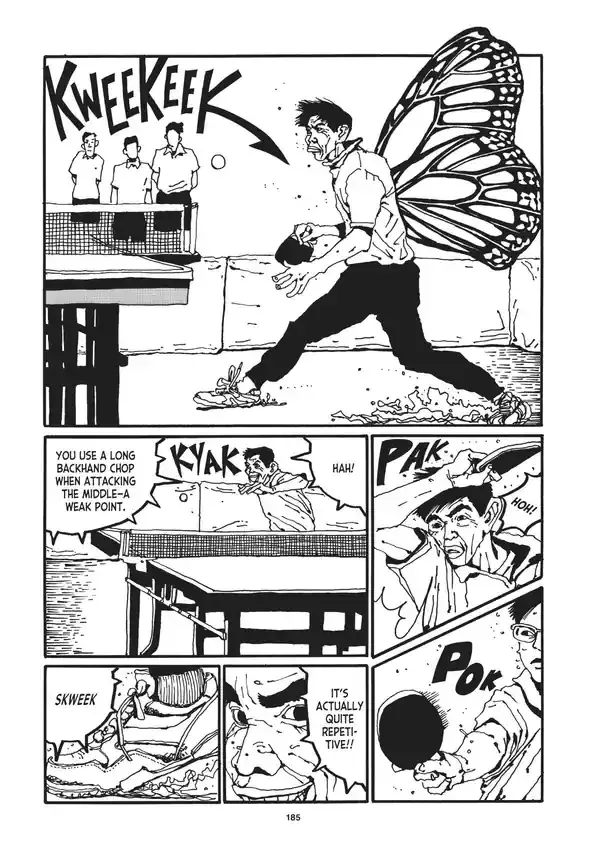
He’s funny, pushy and a bit tragic, an old man trying to relive his youth through a boy who doesn’t care. By the end he sees it isn’t possible. He and Smile both had the talent, but not the mind that only Peco has, that psychological gift of believing in yourself no matter what. Joe is the classic adult who sees himself in you, tries to make up for his past through you, and in the end has to let you be yourself, and accept himself too.
Ping Pong best panels
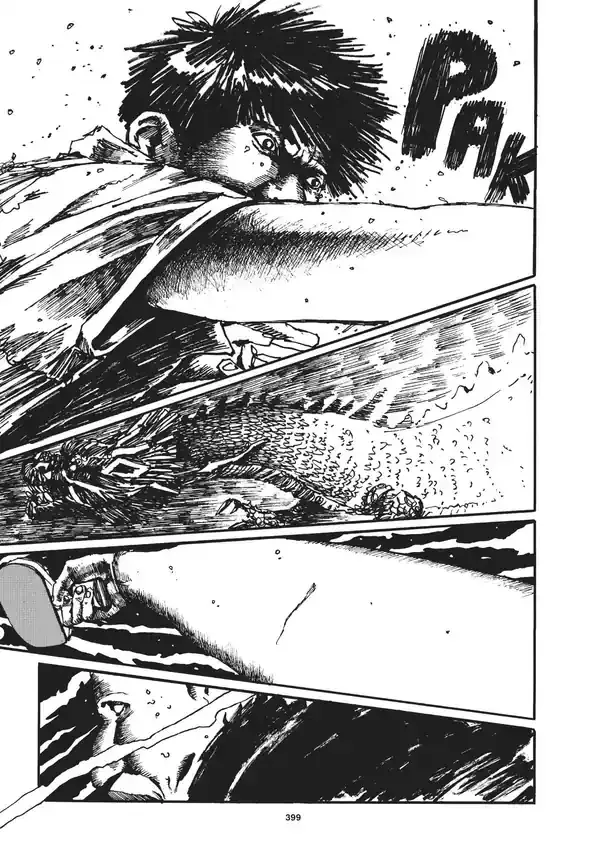
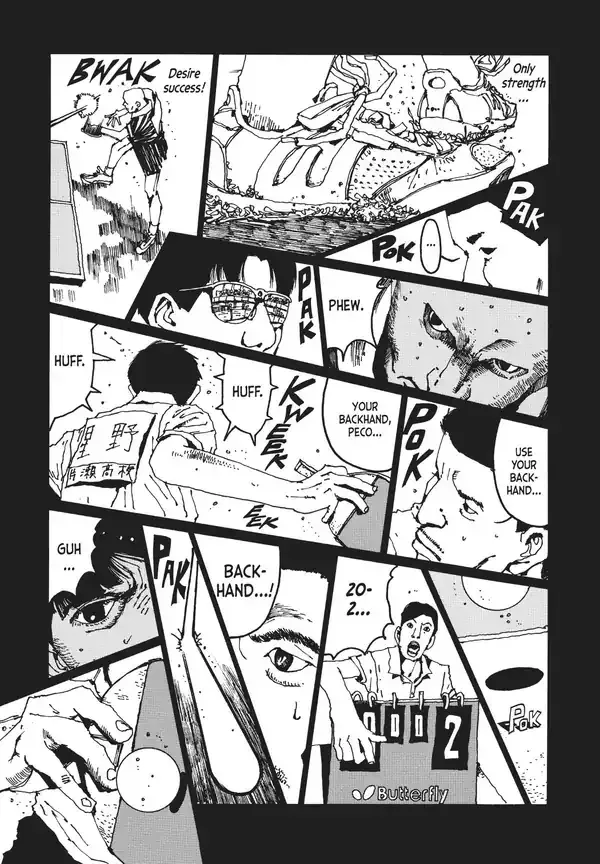
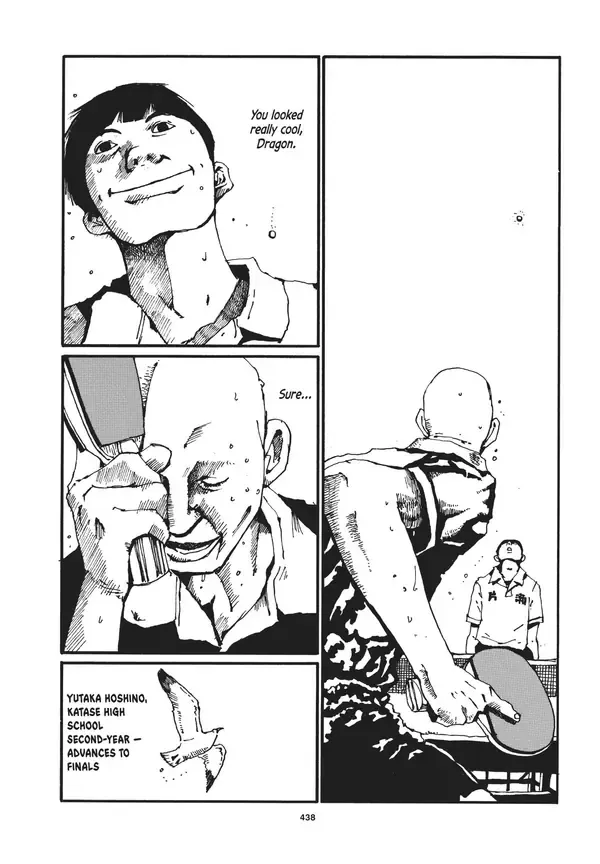
Spoilers. The best panels are in the final rounds, where Matsumoto’s art finally comes together.
Ping Pong ending explained
Spoilers.
The last tournament belongs to Peco. He comes back from his defeats and his bad knee and beats them all, one after another. First Kong, the player who skunked him 21–0. Then Dragon. With his knee failing against Dragon, he should crumble. Instead he starts having fun, and the match turns.
When it’s over, Peco tells Dragon he looked really cool. Losing is the best thing that could have happened to him. For the first time, he can just play.
That’s the real shape of the ending. Peco doesn’t just win, he becomes everyone’s hero. Beating Kong frees him from the weight of everyone’s expectations. Beating Dragon frees him from the pressure of having to win.
Then the final, Peco against Smile. Smile has been waiting his whole life for this, not to beat his hero, but to see him come back. Peco wins, and that’s fine by Smile. He never wanted to be the one at the top. What Peco frees him from is the waiting. His hero is back, so Smile can finally stop carrying everyone else’s dreams and go his own way.
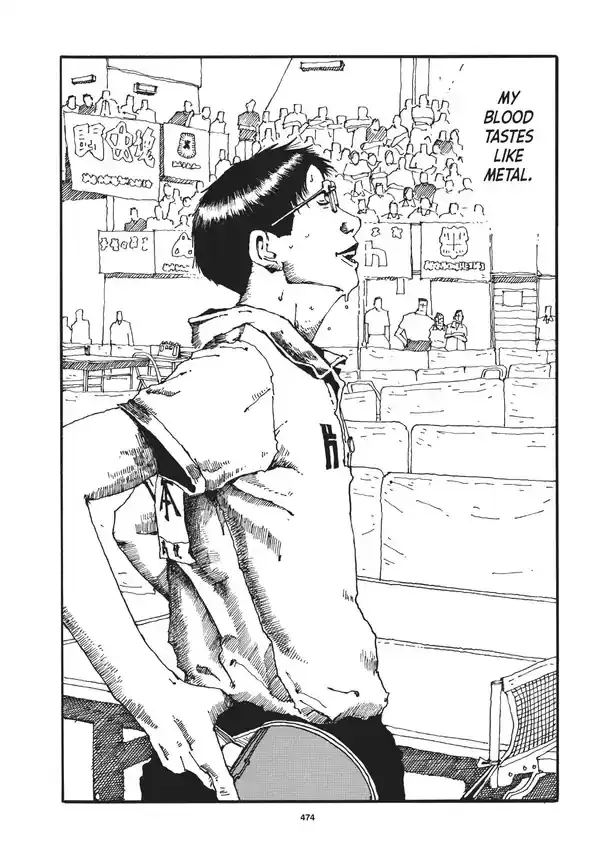
Years later, Peco is playing professionally abroad. Kong has become a Japanese citizen and made Japan’s Olympic team. Dragon has been kicked off the national team. Demon has left the sport behind, with a wife and kids. And Smile has become a high school teacher, just like Butterfly Joe, following in the footsteps of another player who had the talent but was never made for the arena.
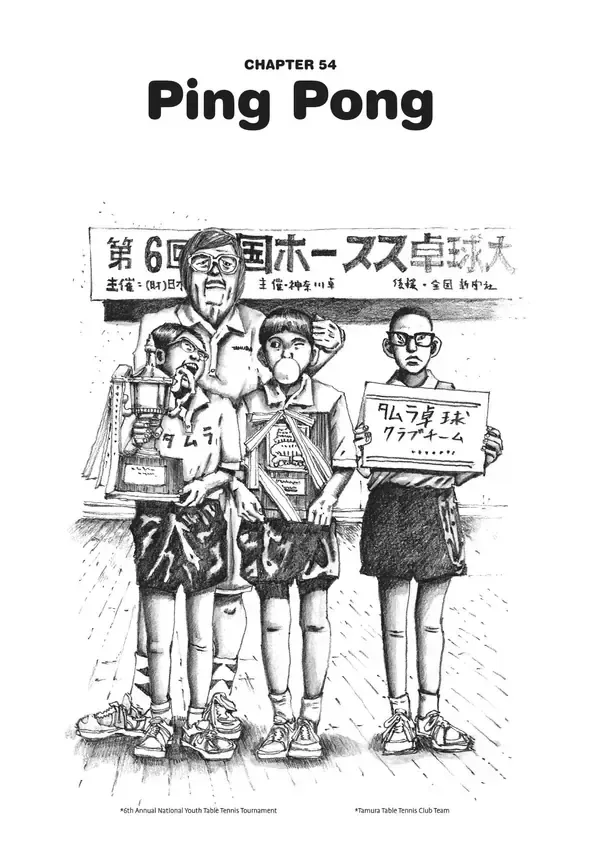
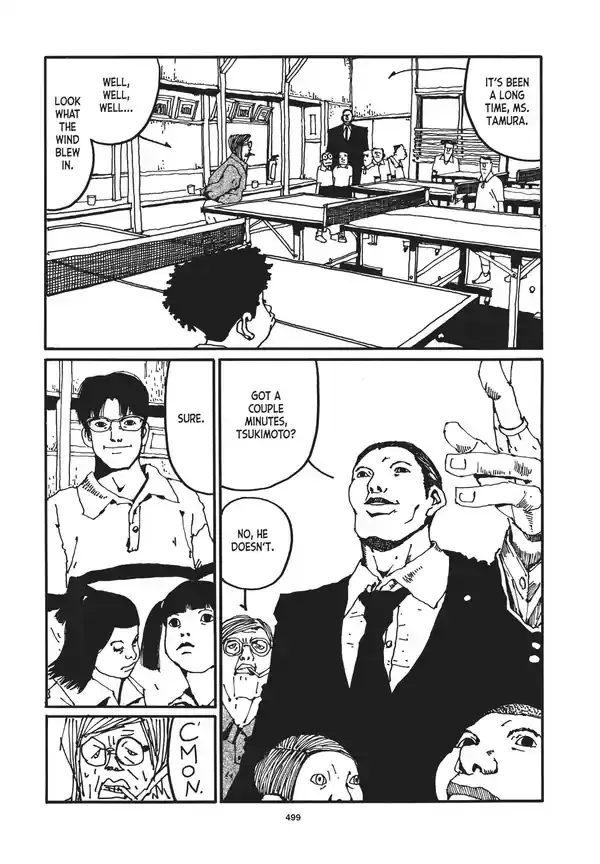
That’s what Ping Pong is really saying. Talent isn’t what separates Peco from the rest. Smile and Joe had plenty, and they both end up in the same place, teaching. It’s self-belief, and the joy that comes with it. And the hero isn’t just the one who wins, it’s the one who makes the game worth playing for everyone else. Smile never needed to beat Peco. He needed Peco to come back.
Where to read Ping Pong
Ping Pong ran to five volumes in Japan. In English, VIZ Media collects it in two big volumes of about 520 pages each, translated by Michael Arias, in print and digitally.
| Edition | Format | Available at |
|---|---|---|
| VIZ Media (2020), 2 volumes | Paperback | Amazon, Bookshop.org |
| VIZ Media, digital | Ebook | VIZ, Amazon Kindle |
| Japanese original (Shogakukan), 5 volumes | Paperback | Amazon Japan |
Manga like Ping Pong
- Tekkonkinkreet (Taiyo Matsumoto). Two street kids ruling a crumbling city. The same scratchy, electric art, and the same friendship at its centre.
- Sunny (Taiyo Matsumoto). Kids in a children’s home in 1970s Japan. Quieter and more personal, and just as moving.
- Planetes (Makoto Yukimura). No sport, but another short seinen classic about people chasing a dream and finding out what it’s really for.